A failing timing chain can destroy your engine. Learn the warning signs, costs, and what to expect from a timing chain replacement at a professional garage.
Your timing chain is one of the most critical components in your engine. It synchronises the rotation of the crankshaft and camshaft, ensuring that the engine valves open and close at precisely the right moment during each combustion cycle. When a timing chain is working correctly, you never think about it. When it starts to fail, the consequences can range from poor engine performance to complete engine destruction. Understanding what a timing chain does, how to spot the warning signs of failure and what replacement involves can save you from an expensive engine rebuild.
For timing-chain enquiries in Stoke-on-Trent, contact Demon Autos & Recovery with the registration, engine details, mileage and service history. This guide covers questions to discuss during assessment; it does not establish the condition of an individual engine.
What Is a Timing Chain and What Does It Do?
The timing chain is a metal chain that connects the crankshaft (at the bottom of the engine) to the camshaft (at the top). The crankshaft converts the up-and-down motion of the pistons into rotational force. The camshaft controls the opening and closing of the inlet and exhaust valves. These two components must be perfectly synchronised for the engine to run correctly.
If the timing is even slightly off, valves may open too early, too late or not far enough. This affects combustion efficiency, reduces power output and increases fuel consumption. If the timing is significantly wrong or the chain breaks entirely, the pistons and valves can collide with catastrophic results. In an interference engine (which most modern cars have), a broken timing chain almost always means bent valves, damaged pistons and a potential engine write-off.
The timing chain system typically includes the chain itself, tensioners (which keep the chain under the correct tension), guides (which prevent the chain from moving laterally) and sprockets (which the chain wraps around). Any of these components can fail, and when they do, the entire system needs attention.
How Is a Timing Chain Different from a Timing Belt?
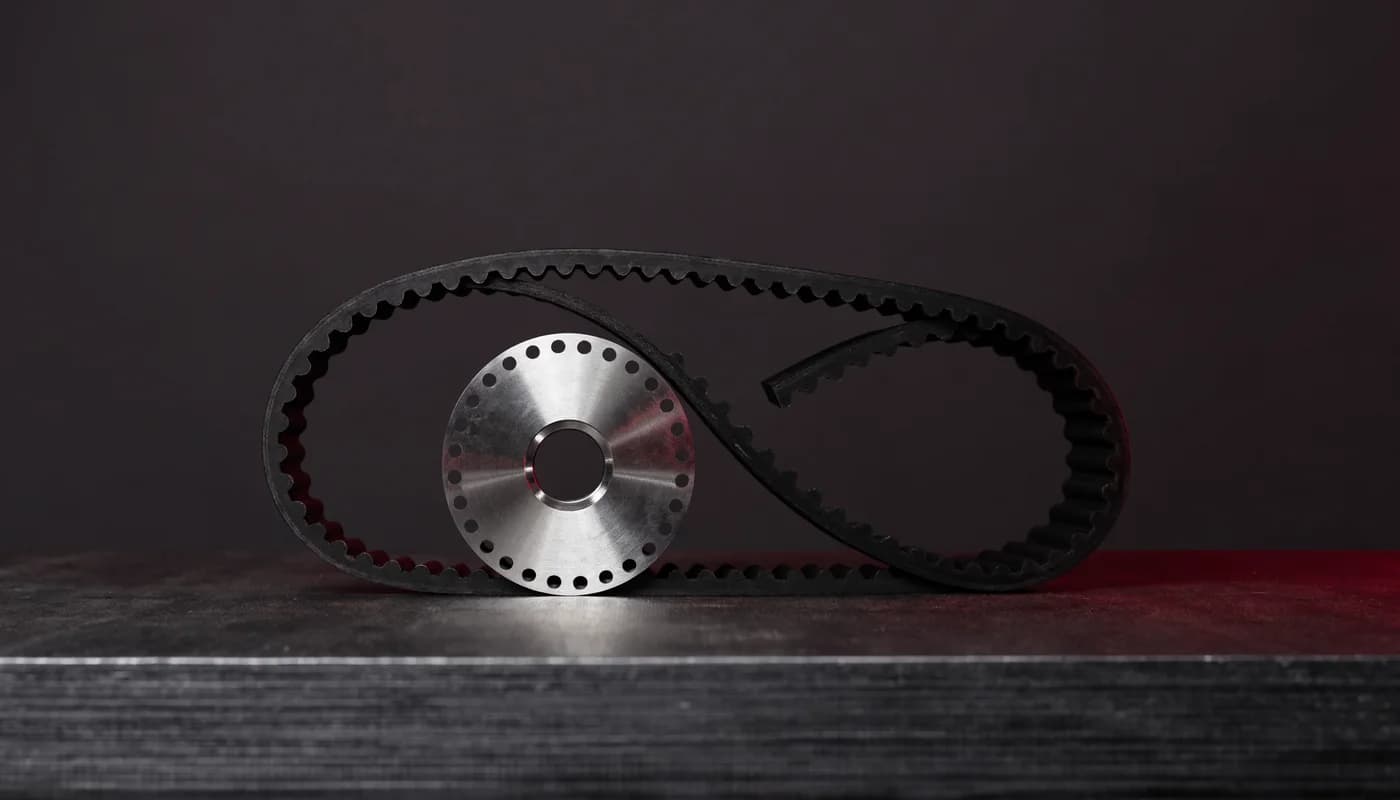
Timing chains and timing belts perform the same function but use different materials and maintenance requirements. A timing belt is a reinforced toothed belt. Its inspection and replacement requirements depend on the engine and production details. Check the current manufacturer schedule and service records for the particular vehicle; there is no single mileage or age interval for every timing belt.
A timing chain uses metal links to connect the timing components. Its maintenance requirements also depend on the engine; do not assume that every chain lasts for the life of the vehicle or follows the same replacement policy. Use current manufacturer information and professional assessment of the service history, symptoms and diagnostic findings to decide whether timing work is needed.
A model range can include engines with different timing-drive systems. Registration information is a useful starting point, but the engine code, production details and manufacturer records may be needed to confirm the arrangement. Avoid choosing parts or a maintenance interval from the model name alone.
What Are the Warning Signs of a Failing Timing Chain?
The most recognisable symptom of a worn timing chain is a rattling or chattering noise from the front of the engine on start-up. This noise is caused by the chain having stretched beyond the capacity of the tensioner to take up the slack. The chain slaps against the guides and inside the timing cover, producing a metallic rattle that is usually loudest when the engine is cold and oil pressure is still building.
The engine management light is another common indicator. As the timing chain stretches, the relationship between the crankshaft and camshaft positions drifts. The engine control unit detects this misalignment through the crank and cam position sensors and logs fault codes such as P0016 (Crankshaft/Camshaft Position Correlation) or P0341 (Camshaft Position Sensor Range/Performance). These codes are a direct signal that the timing chain system needs inspection.
Rough idling and poor engine performance occur because the valve timing is no longer optimal. The engine may feel sluggish, hesitate under acceleration or idle unevenly. In some cases, the engine may misfire because the valves are opening and closing at slightly wrong moments, affecting the combustion process.
Metal shavings in the engine oil are a late-stage warning sign. As the timing chain and guides wear, they shed tiny metal particles into the oil system. These particles can be found during an oil change or oil analysis. If your mechanic reports metal contamination in the oil, the timing chain system should be inspected as a priority.
If you notice any of these symptoms on your daily commute through Milton, Norton Green or anywhere in the Stoke-on-Trent area, get the vehicle inspected promptly. Timing chain problems do not resolve themselves and they get progressively worse with every mile driven.
What Happens If a Timing Chain Breaks?
If a timing chain breaks while the engine is running, the camshaft stops turning immediately while the crankshaft continues to rotate. In an interference engine, the pistons and valves now occupy the same space. The result is bent valves, damaged pistons, scored cylinder walls and potential damage to the cylinder head. The repair cost for this level of damage typically exceeds the value of the car for many vehicles.
Even if the chain does not break outright, a severely stretched chain can skip teeth on the sprockets. This is known as “jumping timing” and has similar consequences. The valve timing shifts dramatically, causing the engine to run extremely poorly or not at all. Jumped timing frequently causes valve-to-piston contact and the resulting damage is identical to a chain breakage.
Do not ignore a new timing-related noise or warning light. Several faults can produce similar symptoms, so professional assessment is needed. Ask whether the vehicle should be driven or transported before continuing to use it.
How Much Does Timing Chain Replacement Cost?
Timing chain replacement costs vary depending on the vehicle, engine design and the extent of the work required. Some engines have the timing chain at the front and it is relatively accessible. Others have the chain at the rear of the engine, between the engine and the gearbox, requiring significantly more labour to access. Transversely mounted engines in front-wheel-drive cars often require partial engine removal to access the timing components.
The required parts depend on the engine, inspection findings and manufacturer procedure. Ask which chains, guides, tensioners, seals, fasteners and fluids the quote includes, and whether any associated damage changes the scope. Do not assume that every engine needs the same kit.
Ask for a vehicle-specific quote showing the proposed parts and labour, VAT, diagnostic charges and exclusions. Confirm any warranty and the approval process for additional work. A general article cannot establish the price of a timing-chain repair for your car.
How Long Does Timing Chain Replacement Take?
Timing-chain work can require substantial dismantling, depending on the engine and where its timing components are fitted. Inspection, parts lead times and any associated damage also affect the schedule. Ask for an estimate for your vehicle rather than relying on a general labour-hour range.
The repair procedure must follow the manufacturer requirements for the exact engine, including timing, fasteners, lubrication and the necessary checks after reassembly. Ask the garage to explain the proposed work and how completion will be checked and recorded.
Confirm drop-off, parts availability and the expected update or collection arrangements before booking. An assessment enquiry is a request to discuss the work; it does not reserve a finished repair date.
Which Cars Are Most Prone to Timing Chain Problems?
Certain engines have well-documented timing chain weaknesses. The VAG (Volkswagen/Audi Group) 1.4 TSI and 2.0 TFSI engines are among the most frequently affected, with timing chain stretch being a known issue, particularly in earlier production runs. The chain tensioner on these engines has been revised multiple times by the manufacturer.
BMW N47 diesel engines (commonly found in the 1 Series and 3 Series) are notorious for timing chain problems, partly because the chain is located at the rear of the engine, making it more difficult and expensive to replace. Ford 1.0 EcoBoost timing arrangements need to be checked for the exact engine and production date. The capacity and registration year alone do not confirm a wet belt, chain or oil-pump drive. Various Vauxhall/Opel petrol engines, Mercedes M271 engines and some Nissan/Renault units also have documented timing chain concerns.
If you are concerned about an engine mentioned here, use its exact identification and current manufacturer information when discussing assessment. A general list of model names cannot establish that an individual vehicle has a defect or needs replacement parts.
Where Can You Get Timing Chain Replacement in Stoke-on-Trent?
Demon Autos & Recovery is at Unit 5 Milton Road, Milton, Stoke-on-Trent, ST1 6LE. Start with the timing-chain assessment page and provide the engine information and symptoms you have.
Ask about the proposed diagnostic checks, charges and how the findings will be explained. Agree any repair scope and price after the vehicle requirements are understood, and keep the resulting invoice and work record with the service history.
Book online or call us on 07459 759160 to arrange a timing chain inspection. Visit our timing chain replacement page for full details on the service.
Frequently Asked Questions
What are the symptoms of a stretched timing chain?
A rattling noise from the front of the engine on cold start is the classic sign, often lasting a few seconds before the oil pressure comes up. You may also get an engine management light with camshaft or crankshaft correlation fault codes, rough running, poor performance and worse fuel economy. On many engines the rattle is the only warning you will get, so it is worth acting on.
How long does a timing chain last?
There is no universal timing chain replacement mileage. Follow the manufacturer maintenance guidance for the engine and seek assessment of symptoms. Service history and diagnostic findings help establish whether timing work is required.
What happens if a timing chain breaks?
On the majority of modern engines, which are interference designs, a snapped chain lets the pistons hit the valves. That typically means bent valves, damaged pistons and often a cylinder head that needs replacing. The repair bill is usually several times the cost of replacing the chain before it fails, which is why the rattle on start-up should never be ignored.
Should the tensioner and guides be replaced too?
The appropriate parts depend on the exact engine, manufacturer procedure and inspection findings. Ask which chains, guides, tensioners, fasteners, seals and fluids the proposed repair includes, and whether associated damage changes the scope.