
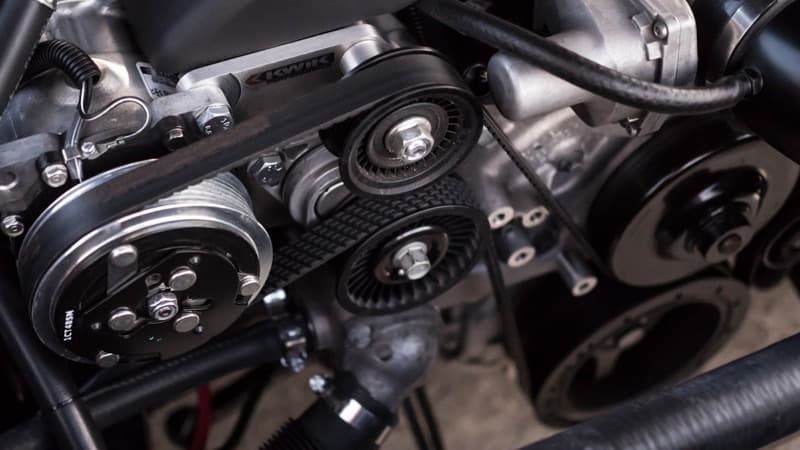
Wet Belt Replacement
Ford EcoBoost, PSA PureTech and every other wet cambelt engine. Done properly, before it costs you a new engine.
Wet Belt Replacement
Ford EcoBoost, PSA PureTech and every other wet cambelt engine. Done properly, before it costs you a new engine.
A wet belt is a cambelt that runs inside your engine, sitting in the oil rather than behind a cover on the outside. Manufacturers went this way to cut friction and meet emissions targets. In practice the rubber breaks down in hot oil, sheds material, and that material blocks the oil pump pickup. Oil pressure drops and the engine can destroy itself. It is the single most expensive thing that can go wrong quietly on a modern small-capacity engine.
If you drive a Ford with the 1.0 EcoBoost, or a Peugeot, Citroen, DS, Vauxhall, Fiat, Alfa Romeo or Jeep with the turbocharged 1.2 PureTech, this affects you. So does the Ford 1.5 EcoBlue. Manufacturer change intervals have been cut more than once as failures piled up, and a service book printed in 2016 is not telling you the truth about 2026.
We replace wet belts at our Milton Road workshop as routine work. The main belt, the oil pump belt where one is fitted, tensioners, seals, a cleaned pickup screen and the correct oil specification going back in. Fixed price agreed before we start. If you are not sure whether your car has one, send us the registration and we will tell you straight.
Timing Belt or Chain? Check Your Reg
Enter your registration and we will tell you whether your engine runs a timing chain, a normal cambelt, or a wet belt that sits in the oil. Free, and we do not ask for your details.
Wet Belt by Model
Which engines are affected, what the interval is and what replacement involves, broken down by the vehicles we see most.
Which Cars Have a Wet Belt?
The Ford 1.0 EcoBoost is the one most drivers in Stoke-on-Trent will recognise. It has been fitted to the Fiesta, Focus, EcoSport, B-Max and C-Max since 2012, though Ford revised it in 2018 and 2019 so the camshafts run on a chain, leaving only a smaller wet belt driving the oil pump and it is everywhere on the roads around Hanley and Longton. The 1.5 EcoBlue diesel also uses a belt-in-oil design, as does the 2.0 EcoBlue, which appears in the Transit and Custom vans, the Kuga, S-Max, Galaxy, Mondeo and the Ranger from 2019. The older 1.6 TDCi is often lumped in with these, but it actually runs a conventional dry belt on the outside of the engine.
On the Stellantis side, the 1.2 PureTech petrol is the engine to know about. It appears in the Peugeot 208, 2008, 308 and 3008, the Citroen C3, C4 and Berlingo, the DS3 and DS7, and since PSA bought Vauxhall in 2017, in the Corsa, Mokka, Crossland and Astra. Worth knowing that only the turbocharged version uses a wet belt: the naturally aspirated 82hp car has a timing chain. The PureTech has had a particularly rough reputation for belt degradation, and PSA has revised the replacement interval downwards more than once in response.
Manufacturers keep adding belt-in-oil engines as they chase emissions figures, so the list is not static. If you are unsure, the quickest answer is to send us your registration number. We will look up the engine and tell you whether you have a wet belt, what the current recommended interval is, and roughly where your mileage puts you. There is no charge for asking.
How Often Should a Wet Belt Be Changed?
This is where a lot of people get caught out. Ford originally quoted ten years or 150,000 miles for the EcoBoost belt. PSA quoted similar figures for the PureTech. Both have since been revised downwards, quietly, as warranty claims and engine failures mounted. If you are working from the interval printed in the service book when the car was new, you are working from a number the manufacturer no longer stands behind.
The consensus among independent specialists now sits at around six years or 60,000 to 70,000 miles, whichever arrives first. Age matters as much as mileage here, because the degradation is chemical rather than purely mechanical. A low-mileage 2018 Fiesta that has done 30,000 miles of short trips around Abbey Hulton and Bentilee is still a candidate, because the belt has spent eight years sitting in hot oil.
Short journeys make it worse. Oil that never fully reaches temperature holds moisture and contaminants, and that accelerates the breakdown of the belt material. A lot of city driving in Stoke, school runs and short hops to the shops is exactly the usage pattern that shortens wet belt life. If that describes your driving and your car is past five years old, it is worth getting checked now rather than next year.
What Happens If a Wet Belt Fails?
A wet belt rarely snaps in the way an old external cambelt would. Instead it degrades gradually, shedding fine rubber particles into the engine oil. Those particles circulate and collect at the oil pump pickup screen, which is the mesh filter that stops debris entering the pump. As the screen blocks, oil flow drops. The engine keeps running, often with no dramatic warning, while the bearings and camshafts are progressively starved of oil.
By the time the oil light comes on or you hear rattling on a cold start, damage is usually already done. The common outcomes are worn crankshaft and camshaft bearings, a seized engine, or a turbo failure caused by oil starvation. Any of those means a replacement engine or a full rebuild, which on a car worth a few thousand pounds is often more than the vehicle is worth. Insurance will not cover it, because it is classed as wear and maintenance.
Set against that, a planned wet belt replacement is straightforward preventative work. That is the whole argument for doing it early. This is not a job where waiting for symptoms saves you money, because the symptoms and the catastrophic failure arrive at more or less the same time. If your car is in the affected list and past five or six years old, get it looked at.
Why Choose Demon Autos for Wet Belt Replacement in Stoke-on-Trent?
Wet belts are routine work here, not something we see once a year. The EcoBoost and PureTech engines are everywhere on Stoke roads, and we have the locking tools, the experience and the parts supply to do them properly. That matters on these engines, because getting the timing wrong or reusing a tensioner that should have been replaced turns a preventative job into an expensive one.
We do the whole job, not the visible half. The main belt, the oil pump belt where one is fitted, tensioners and seals. Then we clean or replace the oil pickup screen and flush the system, because leaving old belt debris in the sump means it will simply migrate into the new setup and you will be back within months. Plenty of places quote a cheaper price by skipping that step. We would rather explain why it matters.
Refill is to the exact manufacturer oil specification. Wet belt engines are unusually sensitive to oil grade, and the wrong specification measurably shortens belt life, which rather defeats the point of the job. Every wet belt replacement is quoted as a fixed price with parts, labour, oil, filter and VAT included, agreed before we start. Whether you are coming from Milton, Norton, Burslem, Endon or anywhere across the city, you get a straight answer and honest work.
What Does This Service Include?
Full Kit Replacement
We replace the cambelt, the oil pump belt where fitted, tensioners and seals as one job. Doing half the work means going back in twice.
Oil Pickup Cleaned
Old belt debris sits in the sump and will clog a new setup. We clean or replace the pickup screen and flush the system properly.
Correct Oil Spec
Wet belt engines are fussy about oil. We refill with the exact manufacturer specification, because the wrong oil shortens belt life dramatically.
EcoBoost & PureTech
Ford 1.0 EcoBoost, 1.5 and 2.0 EcoBlue, Stellantis 1.2 PureTech and 1.5 BlueHDi. These engines are routine work for us, not a once-a-year job.
Timing Verified
Locking tools on every job and a diagnostic scan afterwards. Timing is checked properly, never eyeballed.
Fixed-Price Quote
Parts, labour, oil, filter and VAT quoted upfront. No mid-job phone calls asking for more money.
What Do Customers Say About Demon Autos?
Leave Us a Review“Got my car back same day and the price was exactly what they quoted. No messing about.”
“Broke down on the A500 at midnight. There within 30 minutes. Can't recommend enough.”
“Alloys look brand new. Better than the dealer. Top lads.”
“Honest garage. Told me my brakes were fine when another place wanted £400. Trust these guys.”
What Kind of Work Has Demon Autos Done?
Real jobs. Real results.


Body Repair: BMW 3 Series
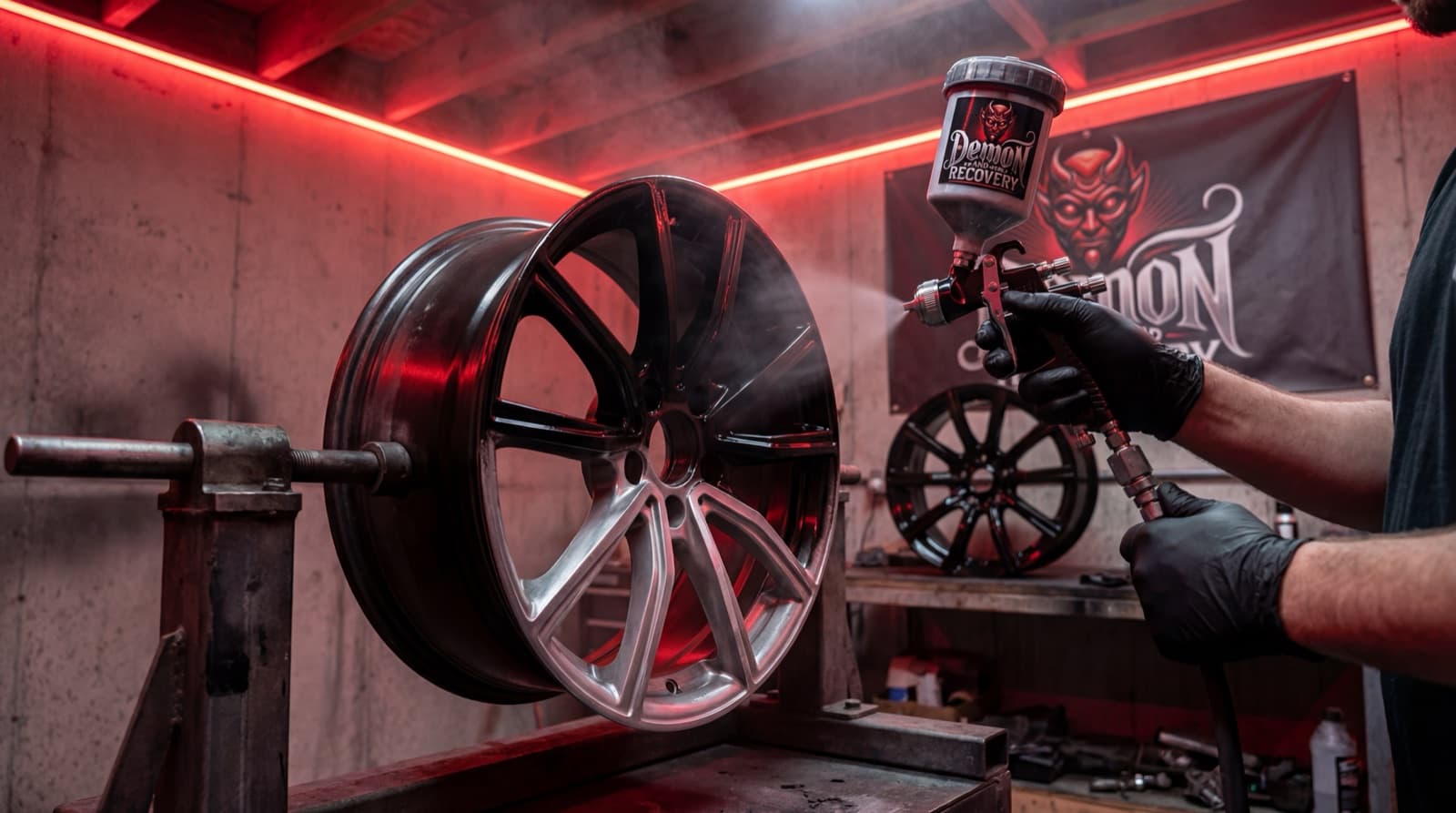
Alloy Refurb: Audi A4
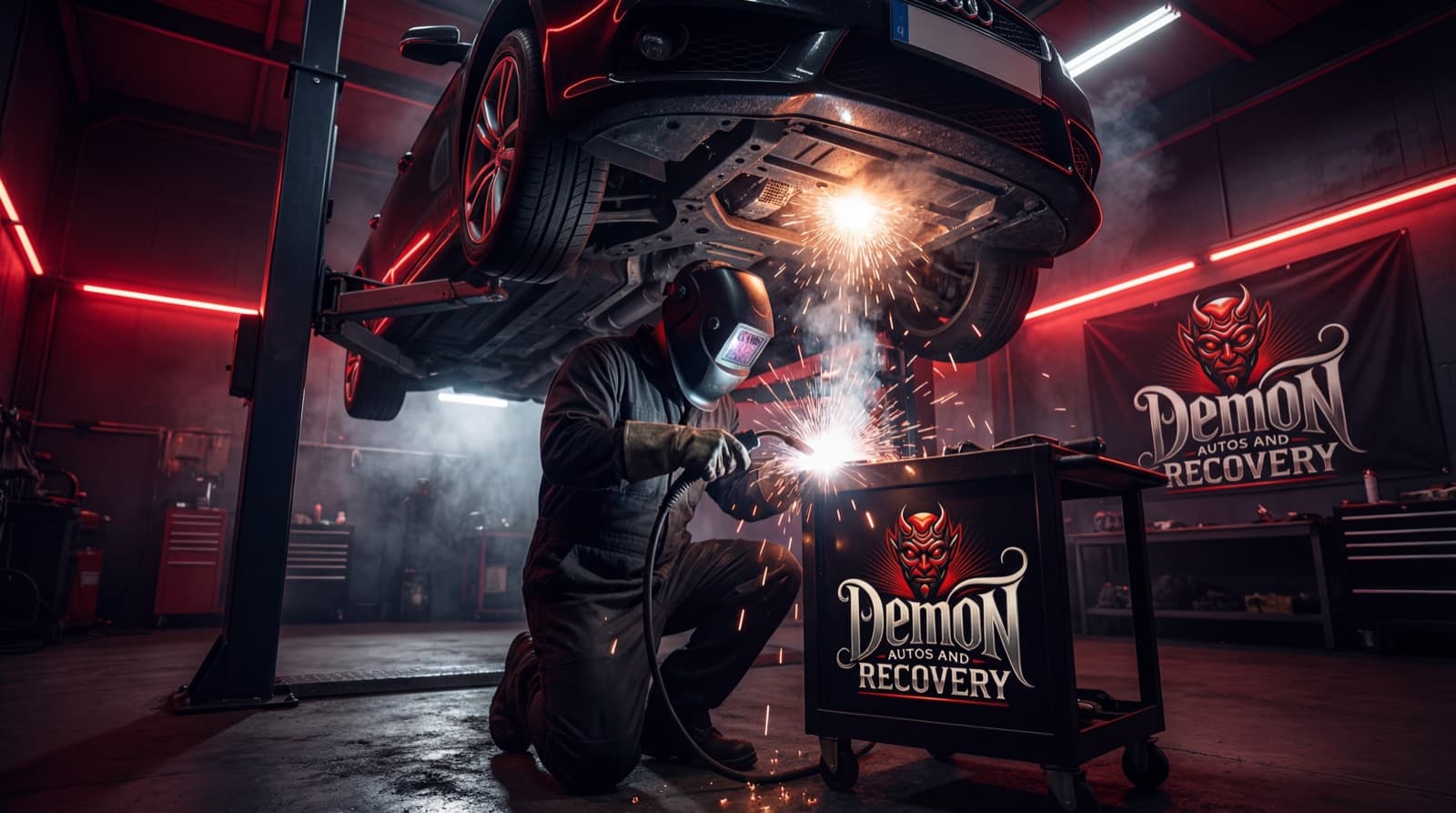
Welding: Ford Transit
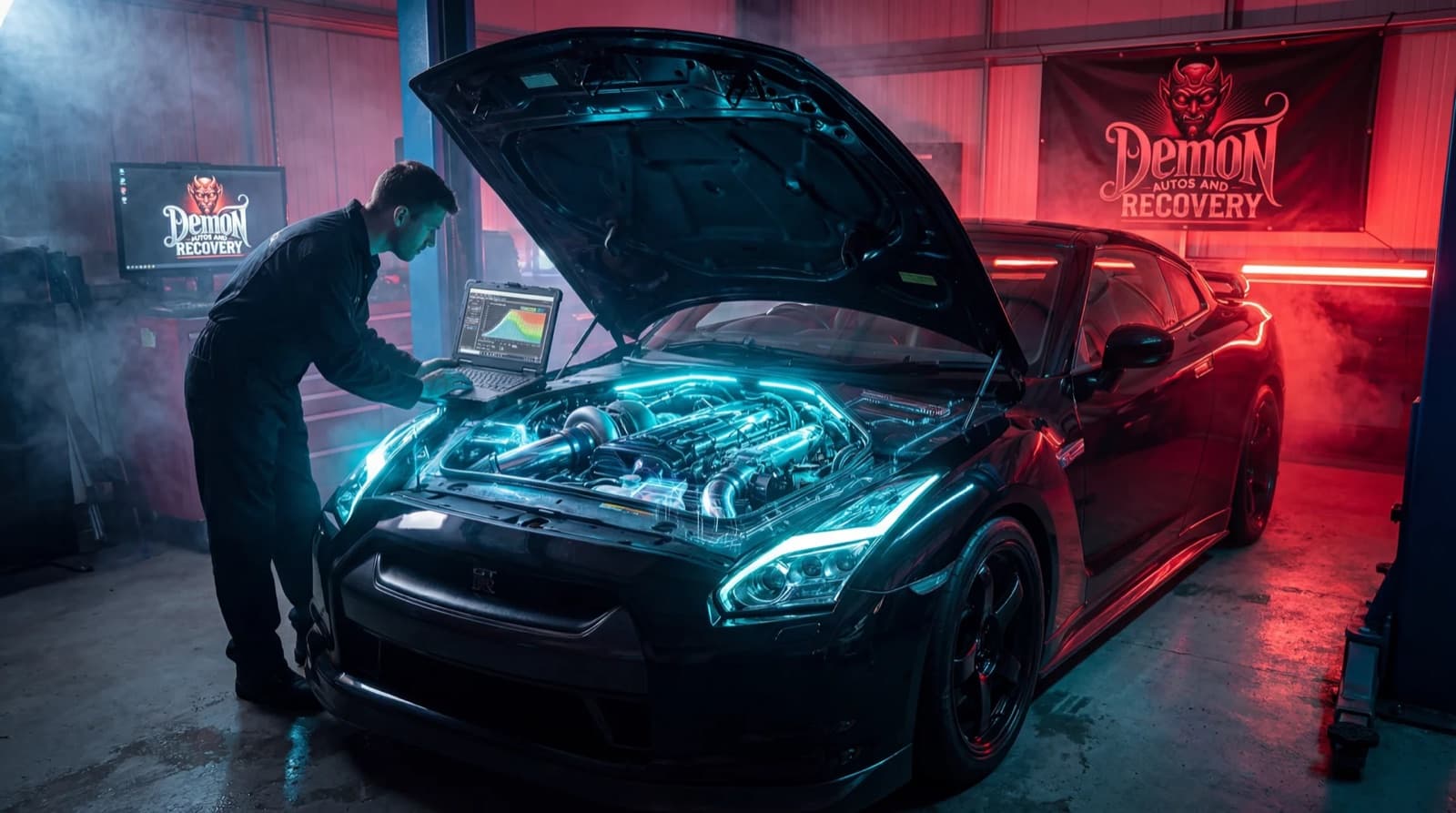
Remap: VW Golf
Full Service: Vauxhall Astra

Recovery: Peugeot 208
Common Questions About This Service
What is a wet belt?
A wet belt is a cambelt that runs inside the engine, submerged in engine oil, rather than outside it behind a cover. Manufacturers moved to wet belts because running the belt in oil reduces friction and helps meet emissions targets. The problem is that the rubber degrades over time in hot oil, and the material it sheds blocks the oil pump pickup screen. That causes oil starvation and, in the worst cases, complete engine failure.
Which cars have wet belts?
The most common are the Ford 1.0 EcoBoost and 1.5 EcoBlue, and the Stellantis 1.2 PureTech petrol and 1.5 BlueHDi diesel found in Peugeot, Citroen, DS, Vauxhall, Fiat, Alfa Romeo and Jeep. Vauxhall got these engines after PSA bought the brand in 2017, so Corsa, Mokka, Crossland and Astra models from 2017 onwards are affected. If you drive a Fiesta, Focus, EcoSport, Puma, 208, 2008 or 308 from roughly 2012 onwards, there is a good chance it has a wet belt.
How much does wet belt replacement cost?
Wet belt replacement at Demon Autos is significantly cheaper than main dealer prices because we keep our overheads low on Milton Road. The exact figure depends on your engine and whether the oil pump belt and pickup screen need doing at the same time, which on most PureTech and EcoBoost engines they should. Send us your registration and we will give you a fixed-price quote before any work starts, with parts, labour, oil and VAT included.
How often should a wet belt be changed?
Manufacturer intervals have been repeatedly revised downwards as failures mounted. Ford originally quoted ten years or 150,000 miles on the EcoBoost and later cut it. PSA has reduced the PureTech interval more than once. Most independent specialists now recommend changing a wet belt at six years or 60,000 to 70,000 miles, whichever comes first, regardless of what the original service book says. If yours is overdue, do not wait.
What are the symptoms of a failing wet belt?
The warning signs are a rattling or whining noise from the engine on cold start, an oil warning light, low oil pressure, rough running or misfires, and black rubbery debris visible in the oil or on the dipstick. Many wet belts give very little warning before they shed enough material to block the oil pickup, which is why replacing on time matters far more than waiting for symptoms.
What happens if a wet belt fails?
When the belt breaks down, particles of rubber circulate in the oil and clog the pump pickup screen. Oil pressure drops, the bearings and camshafts are starved, and the engine can seize. At that point you are usually looking at a replacement engine costing thousands rather than a planned belt change. This is why a wet belt is one of the few jobs genuinely worth doing early.
Do you replace the oil pump belt at the same time?
Yes, on engines that have one. The 1.2 PureTech and several Ford units drive the oil pump with a second wet belt, and there is no sense replacing the main belt while leaving the oil pump belt to fail. We also clean or replace the oil pickup screen and flush the system, because old belt debris left in the sump will simply clog the new setup.
Other Services You Might Need
Not Sure If Your Car Has a Wet Belt?
Send us your registration and we will tell you straight, along with a fixed-price quote. No charge for asking.