
Ford Transit Wet Belt
The 2.0 EcoBlue in the Transit and Transit Custom runs its cambelt in engine oil. Here is which Transits are affected, what fails, and what replacement involves.
Ford Transit Wet Belt
The 2.0 EcoBlue in the Transit and Transit Custom runs its cambelt in engine oil. Here is which Transits are affected, what fails, and what replacement involves.
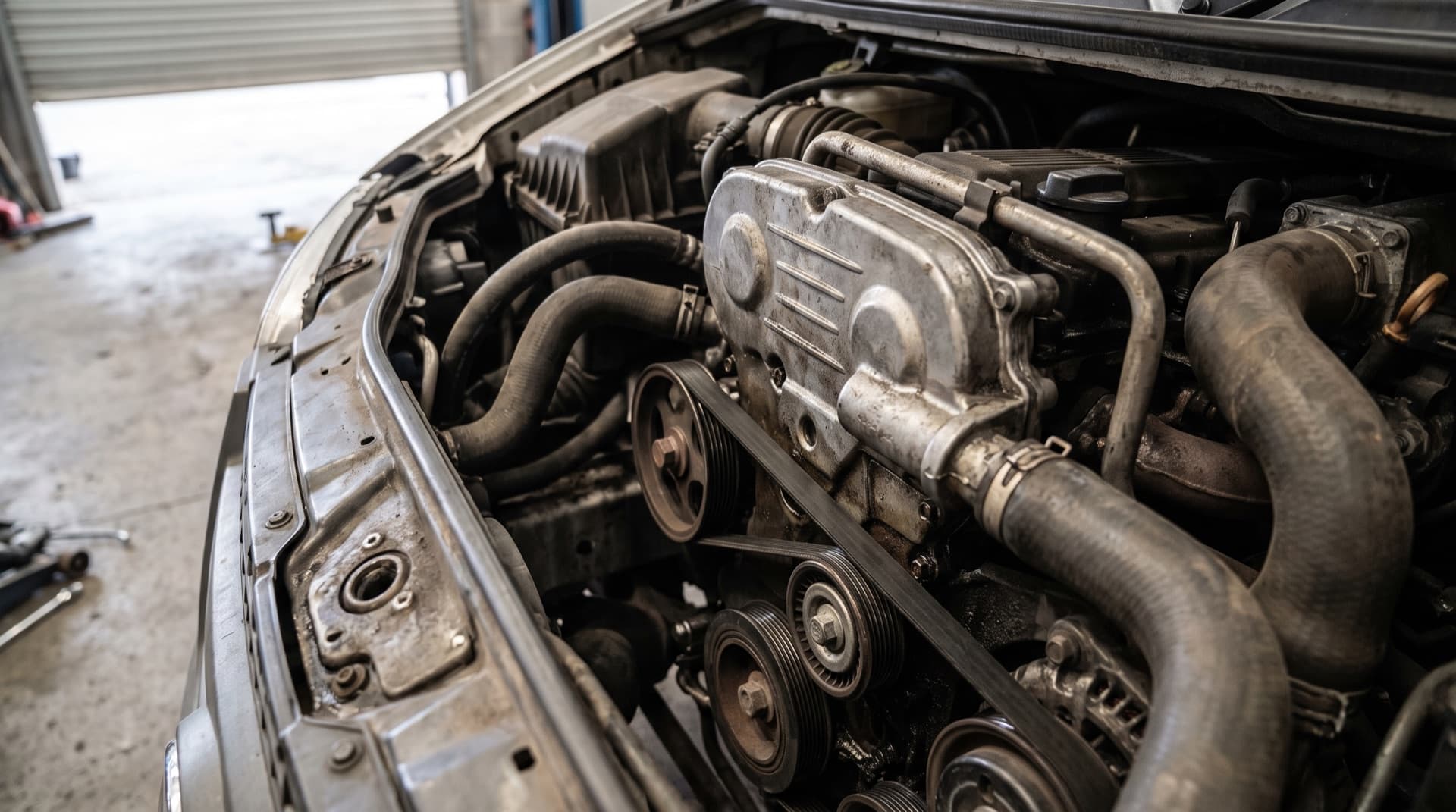
The Ford Transit is the single most common wet belt vehicle we get asked about, and for good reason. The 2.0 EcoBlue fitted from 2016 onwards runs its cambelt inside the engine, submerged in oil, and drives the oil pump with a second belt in oil. As the belt degrades it sheds material, that material blocks the oil pump pickup screen, and the engine starves itself of oil pressure.
Vans make this worse than cars do. A Transit earning its living covers in two years what a family hatchback covers in six, and a lot of that is loaded, in traffic, with the engine working hard. Belt intervals quoted in years arrive long before the mileage does on a working van.
The other thing that catches Transit owners out is that not every Transit has one. The 2.2 TDCi sold up to 2016 uses a conventional external belt, and the five-cylinder units are chain driven. If you are not sure which you have, put the registration into the checker and it will tell you from the engine size.
Which Ford Transit Engines Have a Wet Belt?
| Engine | Years | Belt type | Notes |
|---|---|---|---|
| 2.0 EcoBlue diesel | 2016 onwards | Wet belt | The main Transit and Transit Custom diesel, and the same engine used in the Kuga, S-Max, Galaxy, Mondeo and the Ranger from 2019. Belt-in-oil in every application. |
| 1.5 EcoBlue diesel | 2016 onwards | Wet belt | Fitted to the Transit Connect and Courier. Same belt-in-oil design. |
| 2.2 TDCi diesel | 2006 to 2016 | Dry belt | The older Transit diesel uses a conventional belt on the outside of the engine. Still needs changing, but it is a different job. |
| 2.4 / 3.2 TDCi diesel | 2006 to 2016 | Chain | The larger five-cylinder units are chain driven. |
Timing Belt or Chain? Check Your Reg
Enter your registration and we will tell you whether your engine runs a timing chain, a normal cambelt, or a wet belt that sits in the oil. Free, and we do not ask for your details.
What Does This Service Include?
Full Kit Replacement
Cambelt, oil pump belt where fitted, tensioners and seals as one job. Doing half the work means going back in twice.
Oil Pickup Cleaned
Old belt debris sits in the sump and will clog a new setup. We clean or replace the pickup screen and flush the system.
Correct Oil Spec
Wet belt engines are fussy about oil. We refill your Ford Transit to the exact manufacturer specification.
Right Engine Identified
Several engines share a capacity. We confirm which one is actually in your vehicle before quoting a thing.
Timing Verified
Locking tools on every job and a diagnostic scan afterwards. Timing is checked properly, never eyeballed.
Fixed-Price Quote
Parts, labour, oil, filter and VAT quoted upfront. No mid-job phone calls asking for more money.
What Do Customers Say About Demon Autos?
Leave Us a Review“Got my car back same day and the price was exactly what they quoted. No messing about.”
“Broke down on the A500 at midnight. There within 30 minutes. Can't recommend enough.”
“Alloys look brand new. Better than the dealer. Top lads.”
“Honest garage. Told me my brakes were fine when another place wanted £400. Trust these guys.”
What Kind of Work Has Demon Autos Done?
Real jobs. Real results.


Body Repair: BMW 3 Series
Alloy Refurb: Audi A4
Welding: Ford Transit
Remap: VW Golf
Full Service: Vauxhall Astra

Recovery: Peugeot 208
Common Questions About This Service
Does the Ford Transit have a wet belt?
The 2.0 EcoBlue diesel fitted from 2016 onwards does, and so does the 1.5 EcoBlue in the Transit Connect and Courier. The older 2.2 TDCi sold up to 2016 uses a conventional belt on the outside of the engine, and the larger five-cylinder units use a chain. Put your registration into the checker on this page and it will identify which engine you have.
When should a Ford Transit wet belt be replaced?
Ford has revised the interval downwards more than once. Most independent specialists now work to around six years or 60,000 to 70,000 miles, whichever comes first. On a working van the mileage usually arrives first, and hard commercial use brings it forward again. If yours has never been done and it is past either figure, it is overdue.
What happens if the wet belt fails on a Transit?
It rarely snaps. Instead it breaks down gradually and sheds rubber particles into the oil, which collect at the oil pump pickup screen. Oil pressure drops, the bearings and camshafts are starved, and the engine can seize. On a van that is a replacement engine and a vehicle off the road, which for most owners costs far more than the repair itself.
How long is the van off the road?
Usually a full day at our Milton Road workshop. We replace the cambelt, the oil pump belt, the tensioners and seals, clean or replace the oil pickup screen, flush the system and refill with the correct oil specification. We will give you a firm collection time when you book so you can plan the work around it.
Do you do fleet and multiple vans?
Yes. If you run more than one Transit we can stagger them so you are never short of a vehicle, and quote the whole set up front. Give us a call on 07459 759160 with the registrations and we will work out a schedule that suits.
Other Services You Might Need
Ford Transit Wet Belt Due?
Send us your registration and we will confirm the engine and quote a fixed price. No charge for asking.